
Who is responsible for safeguarding in a school?
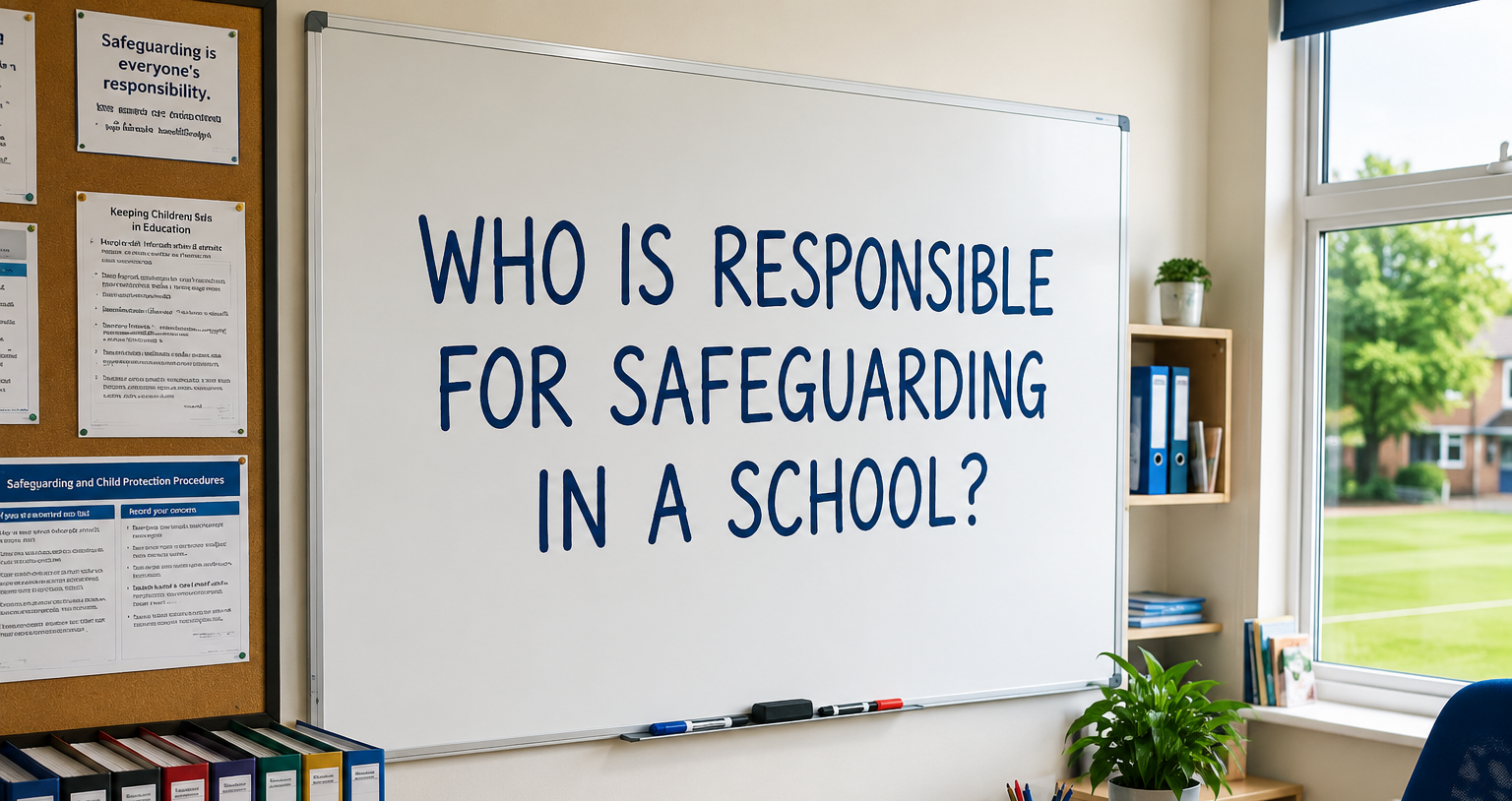
In a school, safeguarding is everyone’s responsibility. Every member of staff, every volunteer, and every governor has a part to play in keeping children safe. At the same time, certain roles carry specific legal duties, and it helps to be clear about who does what.
This article explains who is responsible for safeguarding in a school. It covers how responsibility is shared, from the staff who see children every day to the designated safeguarding lead, the headteacher, the governing board, and the partners outside the school who work together to protect children.
The short version
Safeguarding in a school is a shared responsibility, but it is led and coordinated by the designated safeguarding lead (DSL). The headteacher and the governing board hold overall accountability, every member of staff has a duty to act on concerns, and the school works alongside local safeguarding partners. No single person can keep children safe on their own, which is why clear roles matter.
Everyone who works in the school
The starting point in Keeping Children Safe in Education is simple: safeguarding is everyone’s responsibility. That includes teachers, teaching assistants, office and finance staff, caretakers, lunchtime supervisors, volunteers and anyone else who comes into contact with children.
In practice, this means every member of staff should:
- Know how to recognise the signs that a child may be at risk.
- Know how to report a concern, and who to report it to.
- Act on a concern straight away rather than assuming someone else will.
- Maintain an attitude of “it could happen here”.
Staff are often the first to notice when something is wrong, so their awareness is one of the most important parts of a school’s safeguarding.
The designated safeguarding lead (DSL)
Every school must appoint a designated safeguarding lead. The DSL takes lead responsibility for safeguarding and child protection across the school. This is a role with real weight, and it should be held by a senior member of staff with the time and authority to carry it out.
The DSL is usually the person who:
- Receives concerns from staff and decides what to do next.
- Makes referrals to children’s social care and other agencies.
- Keeps clear, secure safeguarding records.
- Supports and advises colleagues.
- Makes sure the school’s safeguarding policy and procedures are followed.
You can read more about this role in our guide to what a designated safeguarding lead does.
Deputy designated safeguarding leads
Because safeguarding concerns do not wait for a convenient moment, schools also appoint one or more deputy DSLs. They are trained to the same level as the DSL and can step in when the DSL is unavailable. In a larger school, deputy DSLs often share the day-to-day workload.
The headteacher
The headteacher holds overall responsibility for safeguarding within the school day to day. They make sure the safeguarding policy is put into practice, that staff are recruited safely and trained properly, and that the right culture is in place so that concerns are taken seriously and acted on.
The governing board or trustees
Governors and trustees hold strategic responsibility and accountability for safeguarding. They do not run safeguarding day to day, but they must make sure the school has effective arrangements in place and that those arrangements are working.
Most governing boards appoint a nominated or link governor for safeguarding, who takes a particular interest in this area, works with the DSL and reports back to the wider board. The board should receive regular safeguarding updates and assure itself that policies, training and safer recruitment are all up to standard.
The safeguarding partners outside the school
Schools do not safeguard children alone. They work alongside the three local safeguarding partners: the local authority, the integrated care board for health, and the police. These partners share information and coordinate the response when a child needs help or protection. Our article on the three safeguarding partners explains how this works.
What the law says
Schools and colleges have a legal duty to safeguard and promote the welfare of children. This comes from Sections 175 and 157 of the Education Act 2002, and the detail is set out in the statutory guidance Keeping Children Safe in Education, which schools must follow and which is updated regularly. You can find more in our overview of safeguarding legislation.
Making sure everyone understands their role
Knowing who is responsible is only useful if everyone actually understands their part. That is why regular, role-appropriate training matters. All staff need safeguarding awareness training, the DSL and deputies need more advanced training, and everyone benefits from refreshers as guidance changes.
If you want to check that responsibilities are clearly understood and working across your school, an independent safeguarding audit or review can give you an honest picture and a clear action plan. We also provide safeguarding and DSL training for the whole school team.
Frequently asked questions
Yes. In a school, safeguarding is everyone’s responsibility, from teachers and support staff to volunteers and governors. Specific duties sit with the designated safeguarding lead, the headteacher and the governing board, but everyone has a duty to act on concerns.
The designated safeguarding lead has lead responsibility for safeguarding and child protection. They coordinate concerns, make referrals and keep records, supported by one or more deputy DSLs.
Governors and trustees hold strategic accountability. They make sure effective safeguarding arrangements are in place, usually appoint a nominated governor for safeguarding, and receive regular updates and assurance.
Yes. Keeping Children Safe in Education requires every school to appoint a designated safeguarding lead, who should be a senior member of staff with the authority and time to carry out the role.
A trained deputy designated safeguarding lead steps in. This is why schools appoint one or more deputies, so there is always someone available to handle concerns.
Want to be sure safeguarding responsibilities are clear and working across your school? Book a safeguarding audit or review or talk to our team.