
What is a Single Central Record?
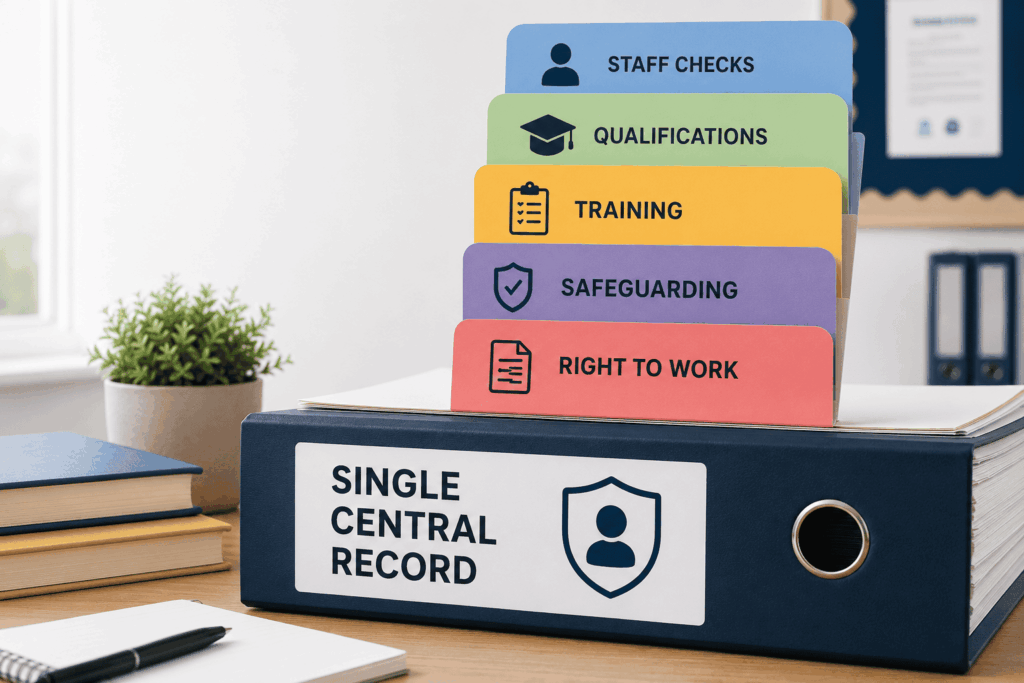
A single central record, or SCR, is the document that schools and colleges in England must keep to log the recruitment and vetting checks for everyone who works with their pupils. It pulls all of those checks into one place. That way, the setting can show at a glance that the right people have had the right checks before working with children.
The SCR is one of the first things an inspector asks to see, and it is the most common place for safeguarding paperwork to fall through the cracks. This guide explains what an SCR is, who must be on it, what checks it covers, and how to keep it compliant.
What does SCR stand for?
SCR stands for single central record. You will also see it referred to as the single central register. Both terms refer to the same document.
What is the single central record for?
The SCR gives a clear, single source of truth that the school has carried out safer recruitment properly. Rather than digging through individual staff files, a school can use the SCR to show that every person working with children has gone through the right vetting.
The statutory guidance Keeping Children Safe in Education sets out this requirement. Schools and colleges must follow it. Maintaining an accurate SCR forms part of the wider legal duty to safeguard children.
Who should be on the single central record?
The SCR covers everyone whose role brings them into contact with children. It is not just for teaching staff. Depending on the setting, that usually includes:
- All teaching and support staff.
- Supply staff and agency workers (the school records that the agency has confirmed the checks).
- Volunteers, where they are in regulated activity or otherwise require checks.
- Governors and trustees.
- Contractors who work on site, recorded as appropriate.
In short, if someone works with or around children, the safe assumption is that their checks belong on the record. Our guide on who is responsible for safeguarding in a school explains how these roles fit together.
What checks does the SCR record?
The single central record confirms that the school has completed the relevant pre-appointment checks. These typically include:
- Identity checks.
- A Disclosure and Barring Service (DBS) check at the right level. Our guide explains what a DBS check is.
- A barred list check, where the role involves regulated activity.
- A prohibition from teaching check, where relevant.
- The right to work in the UK.
- Qualifications, where the role requires them.
- Professional reference checks.
Importantly, the SCR records that each check was done and the date it was carried out. It does not store the documents themselves.

Why does the single central record matter?
The SCR matters because it is the clearest evidence that a school takes safer recruitment seriously. A well-kept record protects children by flagging unsuitable people before they start work. It also protects the school by demonstrating compliance.
It carries particular weight at inspection. Inspectors routinely check the SCR early in the process, and a record with gaps or errors can quickly raise wider questions about safeguarding culture. Our guidance on safer recruitment and on safeguarding for governors sets out the bigger picture.
Common single central record mistakes
Even committed schools slip up on the SCR. The errors are usually small but they still matter:
- Missing dates, or recording that a check happened without logging when it was done.
- Forgetting supply staff, volunteers, contractors or governors.
- Not updating the record when new staff start.
- Treating the SCR as optional admin rather than a statutory document.
- No clear owner, so responsibility falls between people.
Most of these come down to routine rather than effort. A clear process, a named owner, and a regular review keep the record reliable.
How the SCR fits into a safeguarding audit
Because the single central record is such a strong indicator of safer recruitment, auditors always examine it first. A child protection audit checks that the record is complete, accurate and up to date. It also looks at whether the process behind it is sound.
If you would like an experienced, independent pair of eyes on your SCR and wider safer recruitment arrangements, our consultants can carry out a safeguarding audit or compliance review. We also provide safer recruitment training for the staff and governors who are responsible for keeping the record.
Frequently asked questions
SCR stands for single central record, sometimes called the single central register. It is the document schools and colleges keep to record the recruitment and vetting checks for everyone who works with their pupils.
Everyone whose role brings them into contact with children, including teaching and support staff, supply and agency staff, volunteers where required, governors and, where relevant, contractors.
Schools and colleges must maintain a single central record under the statutory guidance Keeping Children Safe in Education, which they are required to follow. It is part of meeting the wider legal duty to safeguard children.
Typically identity, the right level of DBS check, barred list and prohibition checks where relevant, right to work, qualifications where required, and reference checks, each with the date it was completed.
A named member of staff should own and maintain the SCR, usually in the school’s leadership or administration team, with oversight from the headteacher and governing board.
Want to be sure your single central record would stand up to inspection? Book a safeguarding audit or compliance review or talk to our team.