
Allergen and Anaphylaxis Management for Schools
Our online allergen awareness training gives every member of school staff the knowledge they need to keep pupils with allergies safe. Around two children in every classroom are affected by allergies, and about 30% of severe reactions happen in pupils who have never been diagnosed, so allergy awareness matters for everyone, not just the school nurse.
This anaphylaxis training for schools covers the 14 major food allergens, how to spot and respond to an allergic emergency, how to use adrenaline auto-injectors (AAIs) safely, and what the law now expects of your school under Benedict's Law.
Complete it at your own pace in around 20 to 30 minutes, then pass the final assessment to receive your certificate.

Per learner. Bulk discounts from 10 learners.
Price per learner £15.00
Total £15.00
VAT applied at checkout. View pricing table for details.
4.77 / 5
 DurationAround 20 to 30 minutes
 ForAll school staff
 CertificateEmailed on completion
 Full CoverageCovers Benedict's Law
Training your assistants too?
Our learning management system lets you add assistants to your account, monitor their progress and hold certificates centrally.

Per learner. Bulk discounts from 10 learners.
Price per learner £15.00
Total £15.00
VAT applied at checkout. View pricing table for details.
4.77 / 5
OVERVIEW
About this allergen and anaphylaxis training
Childprotectioncompany's allergen awareness training gives school staff a practical understanding of allergens and how to manage them safely. Around two children in every classroom are affected by allergies, and about 30% of severe reactions happen in pupils who have never been diagnosed. This course covers the 14 major food allergens, how to recognise and respond to anaphylaxis, how to use adrenaline auto-injectors safely, and what Benedict's Law now requires of your school, including whole-staff training, spare AAIs and Individual Healthcare Plans.
KEY FEATURES
Updated for Benedict's Law and the new statutory allergy requirements
- ✓
Meets Benedict's Law requirements
Written to meet the statutory requirements introduced by Benedict's Law, including whole-staff allergy training.
- ✓
Suitable for all school staff
Suitable for all school staff, including teaching, catering, admin, first aiders, cover and after-school club staff.
- ✓
Covers emergency response and AAIs
Covers everything from recognising a reaction to giving a spare adrenaline auto-injector and calling 999.
- ✓
Explains your school's legal duties
Explains your school's duties around allergy policies, Individual Healthcare Plans (IHPs) and incident reporting.
- ✓
Upon successful completion of the course
Score 80% or more in the final assessment to receive your personalised certificate, emailed automatically.
DETAILS / BENEFITS
Why schools choose this course
- Instant access to courses
- Takes around 20 to 30 minutes to complete
- Courses can be taken 24/7 online or on mobile devices
- Less expensive than face-to-face training
- No need to take time out of work to undertake training
- One short course covers whole-staff allergy training requirements
- Retrieve centrally held online certificates at the touch of a button
- Individual, personalised certificates can be downloaded and printed
- Downloadable Excel report so you can monitor completion across your school
- Automated reminders when training is due for renewal
- Courses can be stopped and restarted at any point
- Course notes and resources available for the duration of certification
- Friendly, UK-based customer support centre in case you have any queries
- Regularly updated to meet legislation changes, including Benedict's Law
- Includes a downloadable '14 allergens' poster and other classroom resources
COURSE CONTENT
What's included in this allergen and anaphylaxis course
7 modules · Around 20 to 30 minutes · Final assessment included
CERTIFICATION
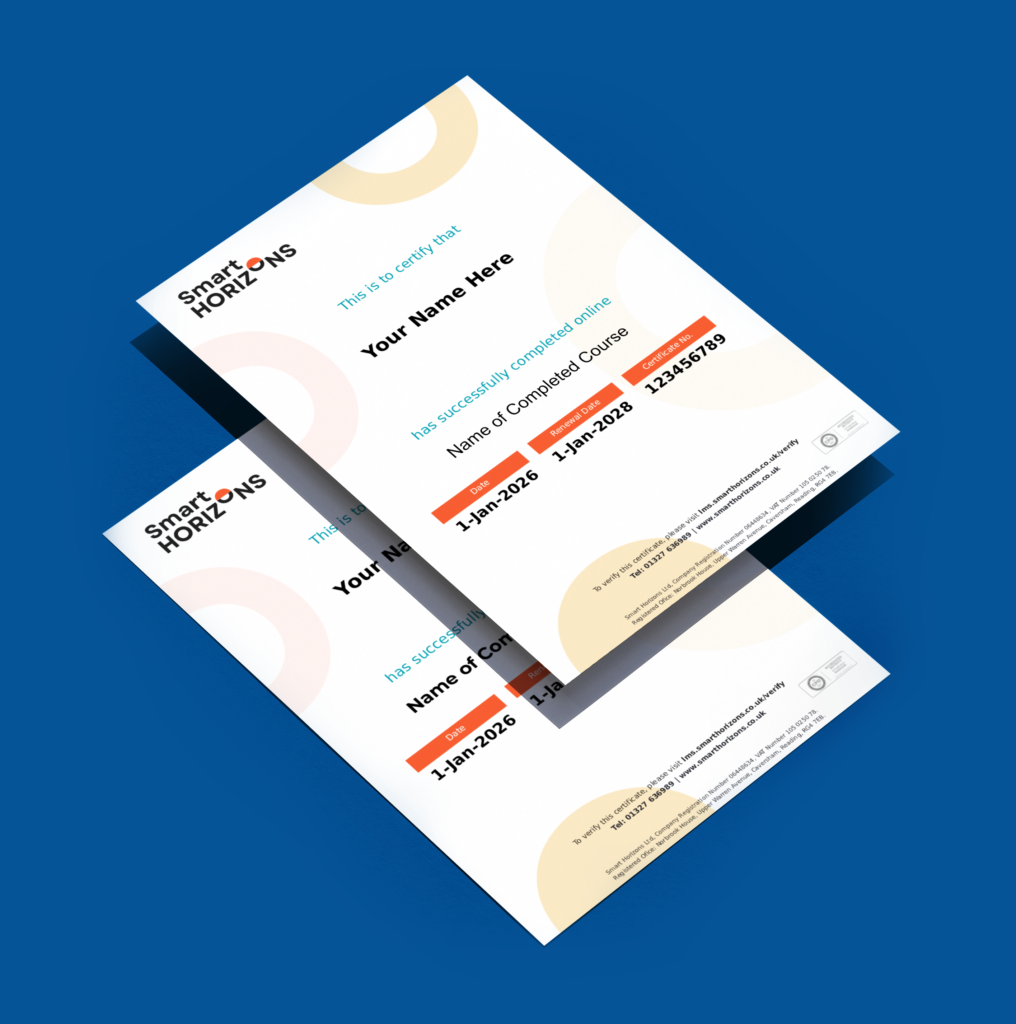
A personalised certificate upon completion
Once you have passed your final assessment, your personalised Allergen and Anaphylaxis Management certificate will be emailed to you automatically.
- Individual, personalised certificate
- Emailed automatically when you pass
- Fully CPD Accredited
- Covers Benedict's Law requirements
TRAINING BUNDLES
Training your team on more than one course?
Our team can put together a custom training bundle for your organisation. Courses often taken alongside Allergen and Anaphylaxis Management for Schools include:
- Safeguarding in Education
- Designated Safeguarding Lead Training
- Online Safety Training for Schools
Discount codes cannot be used with our bundle offers. Get in touch and we will help you choose the right mix of courses.
Contact Us To Find Out MoreFAQs
Allergen and Anaphylaxis Management FAQ
Can't find what you need? Our team is always ready to answer any questions you have.



Talk to our team of experts
Call us today at 01327 552030 or fill out our contact form.